PMC
Master in Project Management for International Cooperation
52st edition | Starting December 2026
+2000 students trained worlwide90% employment within 1 year

Start
December 2026

Duration
9 months + 6 months
CDS

Enrolments
to December 2026

Language
English

Blended
Formula
Discounts
Available
About the Master in Project Management for International Cooperation
The Master in Project Management for International Cooperation has been training project managers for the NGO sector since 1998, making it the first program of its kind in Europe.
Didactic Structure of the Master:
- 1000 hours, 9 months: Didactic Common Path + 3 months Career Development Service
- eLearning + 5 workshops during long weekends in Rome, Madrid, Milan
- TRAINING PERIOD ON THE FIELD: 3-6 Months paid by Social Change School in Africa, Asia, or Latin America, at a field office of an organisation of the sector, at the end of the Master course.
- Group Project Work
- Career Development Service
- Matching – Presenting your profile to NGOs in Europe and outside is so requested.
Key features of the Master in Project Management for International Cooperation
LECTURERS: all the lecturers are professionals and managers working in the main humanitarian and development organizations and NGOs in Europe.
TRAINING PERIOD ON THE FIELD: 3-6 Months reimbursed by Social Change School in Africa, Asia, Latin America or Europe, at an organization of the sector, at the end of the Master course.
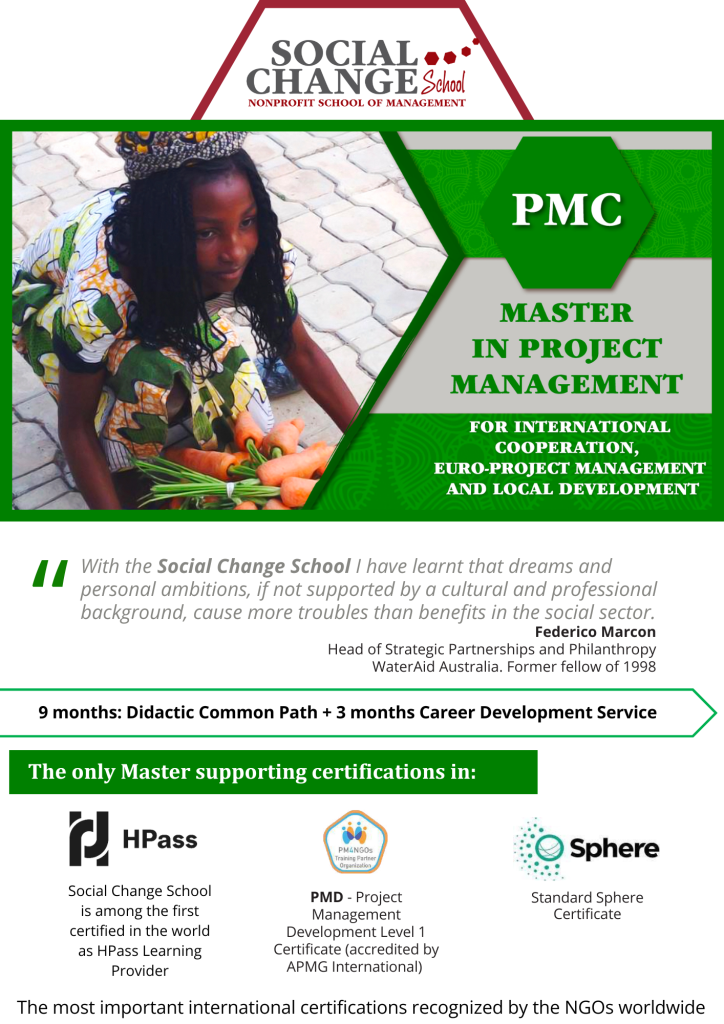
CERTIFICATION: the Master in Project Management for International Cooperation awards a Master diploma and International Certifications.
ARTIFICIAL INTELLIGENCE: Social change school is the first in Europe to offer theoretical and practical lessons on Artificial Intelligence related to Project Cycle Management
Career Development Service
Our career services department offers exceptional support and assist in finding the best match between our students’ skills and competencies and the right organizations.
This is possible thanks to our extensive network of partners.
During the Master in Project Management for International Cooperation, we work together to define an action plan to successfully enter the job market after graduation.
The Career Plan is based on your personal SWOT analysis and on the coaching, and has the “Professional Action Plan” as an output.
The School is dedicated to making significant investments in optimizing its process, ensuring the best possible start for these professionals.
Alumni testimonials
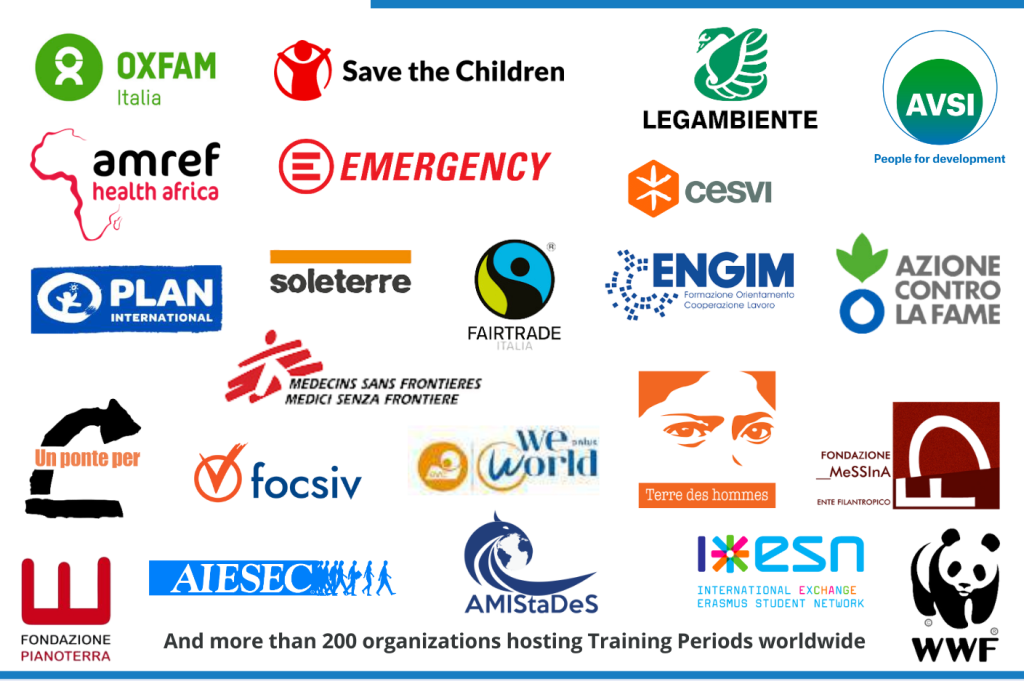
Since 2014 approximately more than 200 PMC students are working
all over the world
Valentina Taglioni
HOPE Students, 1999
Alice Novello
PMC Student, 2024
Mara Colautti
HOPE Students, 2024
Our Staff
Marco Crescenzi
Lorem ipsum dolor sit amet, consectetur adipiscing elit. Ut elit tellus, luctus nec ullamcorper mattis, pulvinar dapibus leo.
Sabrina Munaò
Lorem ipsum dolor sit amet, consectetur adipiscing elit. Ut elit tellus, luctus nec ullamcorper mattis, pulvinar dapibus leo.
Bruno Clerici
Lorem ipsum dolor sit amet, consectetur adipiscing elit. Ut elit tellus, luctus nec ullamcorper mattis, pulvinar dapibus leo.
Our Staff and Lecturers are among the best professionals in the Non Profit sector both at national and international level. They come from major NGOs.
Students’ profile
The Social Change School has a broad range of students and professionals, who emerged from different academic and professional spheres with their ages ranging betweeen 25-55 years old.
Our students are carefully selected and admitted to the Master in Project Management for International Cooperation through a one-to-one interview, which allows us to properly assess the person’s educational and professional background, motivation and job opportunities in the sector for the specific profile.
Students are selected by Social Change School Didactic Staff.
Careers after the Master
Since 1997, Social Change School is the main recruiting area to which Non Profit Organizations turn to recruit and train their executives and managers.
Graduates of the Master in Project Management for International Cooperation are now professionals working in the main non profit organizations in Italy and abroad.
The Social Change School trains the most requested professional profiles in the sector as our EMPLOYMENT FOLLOW UP ANALYSIS demonstrates.
Fill in the form to get the brochure
Our Partners

Add Your Heading Text Here
Lorem ipsum dolor sit amet, consectetur adipiscing elit. Ut elit tellus, luctus nec ullamcorper mattis, pulvinar dapibus leo.
Add Your Heading Text Here
Lorem ipsum dolor sit amet, consectetur adipiscing elit. Ut elit tellus, luctus nec ullamcorper mattis, pulvinar dapibus leo.
Add Your Heading Text Here
Lorem ipsum dolor sit amet, consectetur adipiscing elit. Ut elit tellus, luctus nec ullamcorper mattis, pulvinar dapibus leo.
Frequently Asked Questions
What is the Field Training Period (FTP)?
The FTP is a recommended part of the Master in Project Management for International Cooperation, giving students field experience with NGOs and strengthening their CV. It is usually unpaid, but the school may cover some expenses up to EUR 1,200 (exclusively for travel, accommodation, and insurance). Preferably, the FTP should take place abroad in a low-resource country, but it can also be carried out in the student’s home country if relevant to the master’s program.
What is the mission of the Career Development Service (CDS)?
The CDS supports students of the Master in Project Management for International Cooperation in developing their careers in the social change sector by providing connections and endorsements with third-sector organizations. Additionally, it offers tools to enhance personal branding, develop career strategies, and navigate the job market collaboratively.
Are early bird rates or other discounts available for the Master in Project Management for International Cooperation?
The PMC Master in International Cooperation lets you choose the payment option that suits you best, with a discount either way.
If you pay in a single instalment, you get a 10% discount on the full cost of the Master.
If you prefer to pay in instalments, you get a 5% discount: you pay a €2,700 deposit and split the rest into 2 to 13 monthly instalments, with no interest or administrative fees.
All the information is available in the Master’s brochure, which you can request by filling out the form.